

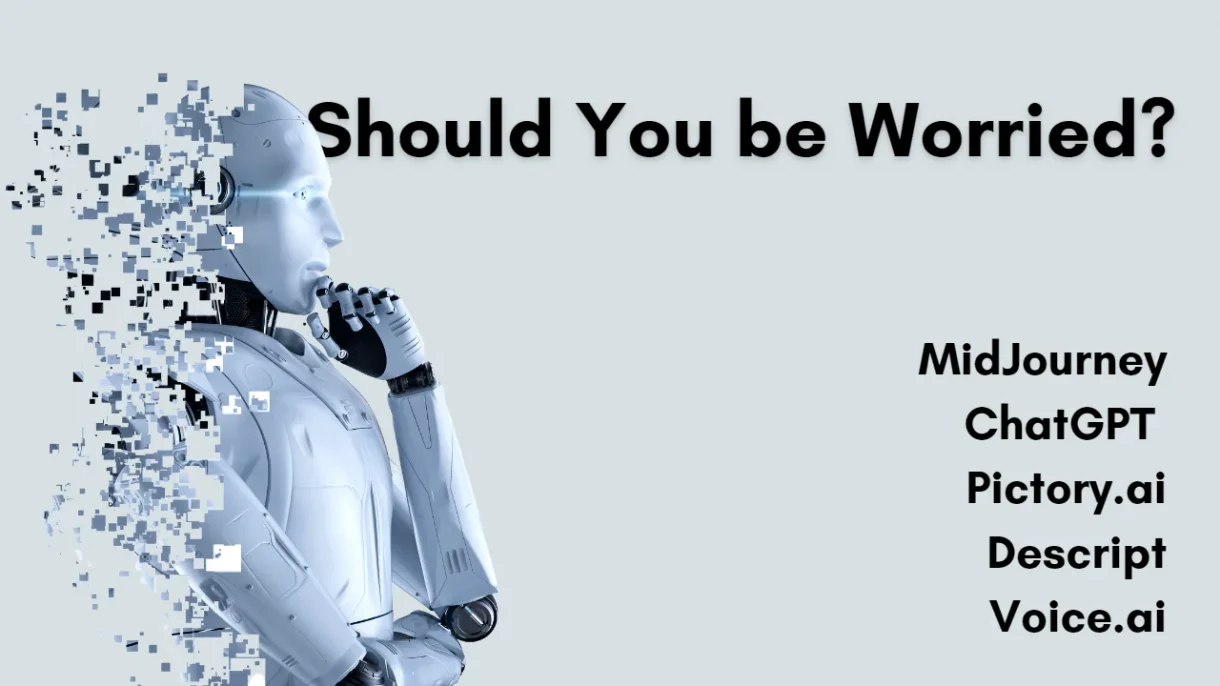
Artificial Intelligence (AI) has been a topic of fascination and concern for many. As technology continues to advance, it’s only natural to wonder about the potential impact AI might have on our lives. In this blog post, we’ll explore the question: Should we be worried about AI? While opinions may vary, I believe that people won’t lose their jobs to AI, but they will definitely lose their jobs if they don’t embrace AI, just like in the internet era.
The Rise of AI:
Artificial Intelligence has rapidly progressed over the past few decades. From machine learning algorithms to natural language processing, AI has proven its potential in various fields. It has revolutionized industries like healthcare, finance, transportation, and even entertainment. However, as AI becomes more prevalent, concerns about its impact on the job market and society as a whole have emerged.
AI and Job Displacement:
One of the primary concerns surrounding AI is the fear that it will lead to widespread job displacement. While it’s true that AI has the capability to automate certain tasks, it doesn’t necessarily mean that humans will lose their jobs entirely. Instead, AI has the potential to augment human capabilities and enable us to focus on more complex and creative endeavors.
History Repeats Itself:
To gain perspective, let’s consider the internet era. When the internet emerged, there were concerns that it would eliminate jobs and render certain professions obsolete. While some jobs did indeed disappear, the internet also created new industries and countless job opportunities. People who embraced the internet and adapted their skills to leverage its potential flourished, while those who resisted or failed to adapt faced difficulties.
AI as an Enabler:
Similar to the internet, AI is not a replacement for human intelligence and creativity, but rather an enabler. It has the potential to automate repetitive tasks, process vast amounts of data, and provide valuable insights. By embracing AI, individuals and businesses can enhance their productivity, efficiency, and decision-making processes.
Upskilling and Reskilling:
To stay relevant in an AI-driven world, it’s crucial to invest in upskilling and reskilling. As AI technology evolves, certain job roles may become obsolete, but new roles will also emerge. By acquiring skills that complement AI capabilities, individuals can position themselves to thrive in the changing job market. It’s important to focus on developing uniquely human skills like critical thinking, creativity, empathy, and adaptability, which AI currently lacks.
Ethical Considerations:
While embracing AI offers immense potential, it’s essential to address the ethical considerations that come with its development and deployment. Issues such as bias in algorithms, data privacy, and job security must be carefully addressed to ensure that AI is used responsibly and for the benefit of society as a whole.

The question of whether we should be worried about AI requires a nuanced perspective. While concerns about job displacement are valid, history has shown us that those who embrace technological advancements and adapt their skills tend to thrive. AI should be seen as a tool to enhance human capabilities rather than a threat to replace us. By upskilling, reskilling, and leveraging the potential of AI, individuals and businesses can navigate the changing landscape and seize new opportunities. So, let’s embrace AI, just as we did with the internet, and unlock its transformative potential for a better future.